INTUMESCENT FIRE-RESISTIVE COATINGS
STRUCTURAL STEEL PROTECTION
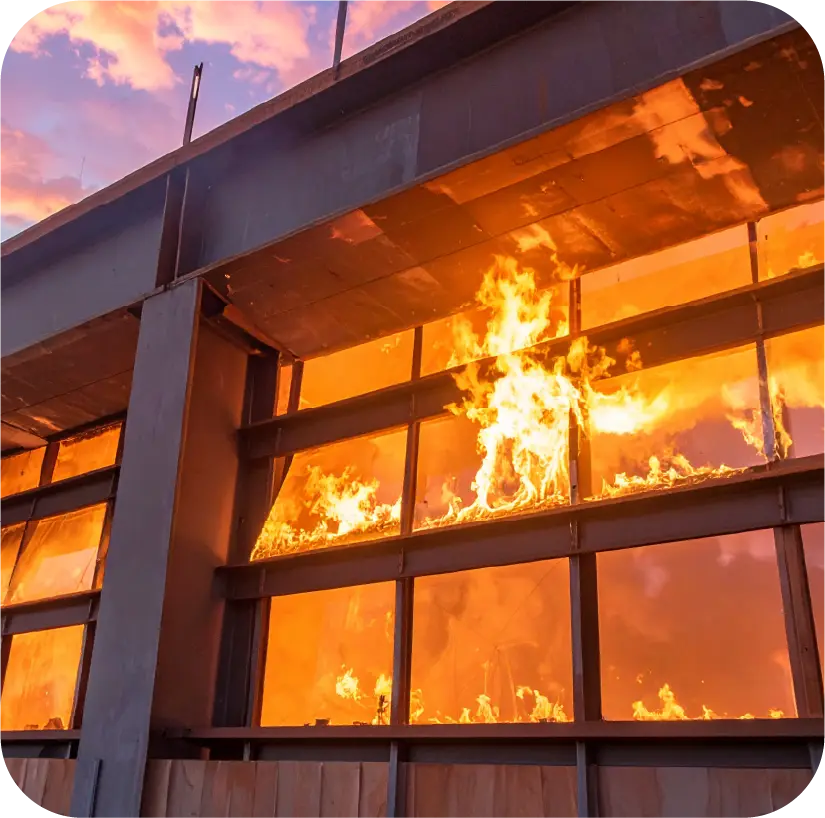
Intumescent fire-resistive coatings protect structural steel by reacting to extreme heat during a fire. When temperatures rise, the coating expands and forms a thick insulating char layer that slows the transfer of heat to the steel. This protective barrier significantly delays the temperature increase that would otherwise cause steel to lose its strength and structural capacity.
By maintaining the steel below its critical temperature (approximately 538–620°C / 1,000–1,150°F), intumescent systems help preserve structural stability, reduce the risk of collapse, and provide valuable time for evacuation and emergency response. Properly engineered and applied, these coatings deliver certified fire-resistance ratings while maintaining a clean architectural finish.
HYDROCARBON FIRE PROTECTION
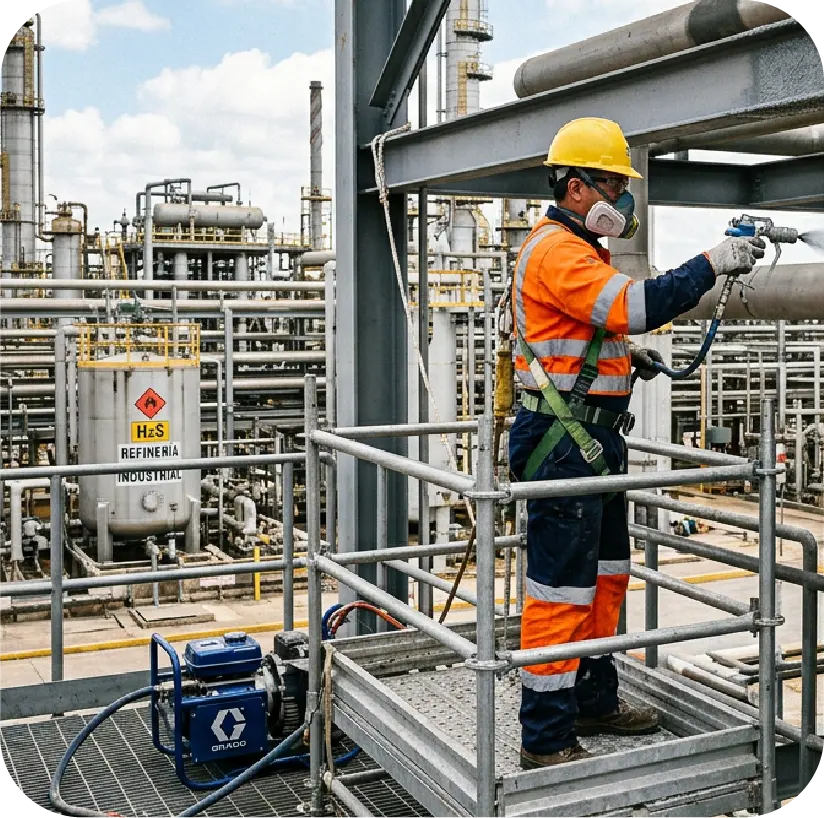
Hydrocarbon fire protection systems are designed for high-risk industrial environments such as refineries, offshore platforms, and petrochemical facilities, where fires can reach temperatures of up to 1,100°C (2,000°F) within minutes. These fires develop much faster and are more intense than typical building fires, requiring specialized protection to prevent rapid structural failure.
In these conditions, epoxy-based intumescent coatings react to extreme heat by expanding and forming a dense, reinforced char layer that insulates the steel and significantly slows heat transfer. By keeping the steel below its critical failure temperature, the system helps preserve structural integrity, reduce collapse risk, and protect critical industrial assets during severe fire exposure.
MASS TIMBER FIRE COATING
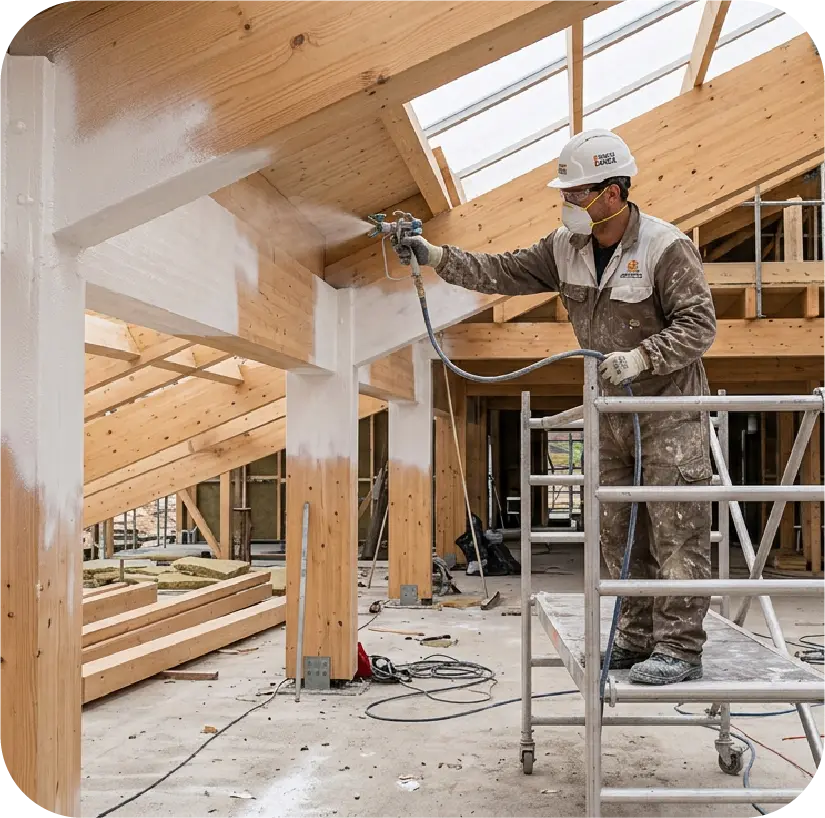
Mass Timber Fire Coating is a specialized intumescent or fire-retardant system designed to protect exposed wood structures such as CLT, glulam beams, and heavy timber columns. While mass timber naturally forms a char layer during a fire, these coatings enhance protection by controlling flame spread and slowing heat penetration into the structural core.
When exposed to high temperatures, the coating expands and forms an insulating barrier that helps maintain structural integrity and achieve required fire-resistance ratings. This allows architects and builders to preserve the natural aesthetic of exposed wood while meeting building and fire code requirements.
IGNITION BARRIER SYSTEMS OVER SPF
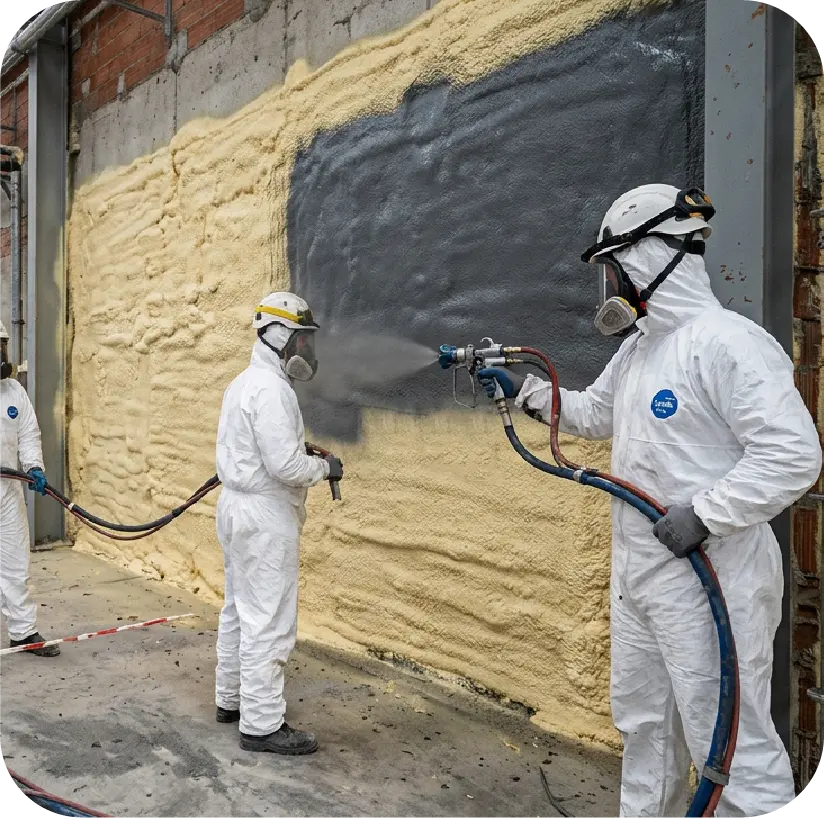
Ignition Barrier Systems over Spray Polyurethane Foam (SPF) are specialized fire-protective coatings applied directly to exposed foam insulation to reduce the risk of ignition. Since SPF is combustible, building codes often require protective measures when it is installed in attics, crawl spaces, or service areas. An ignition barrier helps delay flame contact and slow fire spread in these limited-access spaces.
When exposed to high temperatures, the coating reacts and forms a protective insulating layer that shields the foam from direct ignition. While not structural fireproofing, ignition barrier systems provide an effective and code-compliant solution for enhancing fire safety in buildings where exposed SPF is permitted.